

Create and Share Your First Event
First things first, welcome to AddEvent! We’re thrilled to have you. Let's walk through how you can use one of our most popular tools: creating and sharing events!
AddEvent allows you to easily share your events and keep your guests in the loop, increasing your event attendance! To get started, feel free to open a new window so you can follow along with the video below or follow the steps in this doc to create an event.
Creating an Event
You will start on your Dashboard, and from the Dashboard, there are two different ways to create a new event:
- Click the + Create event button located on the top right-hand corner of the Dashboard.
- Or, you can also click on the day in the calendar on which the event will occur, fill out the event details in the pop-up window, and select More options.
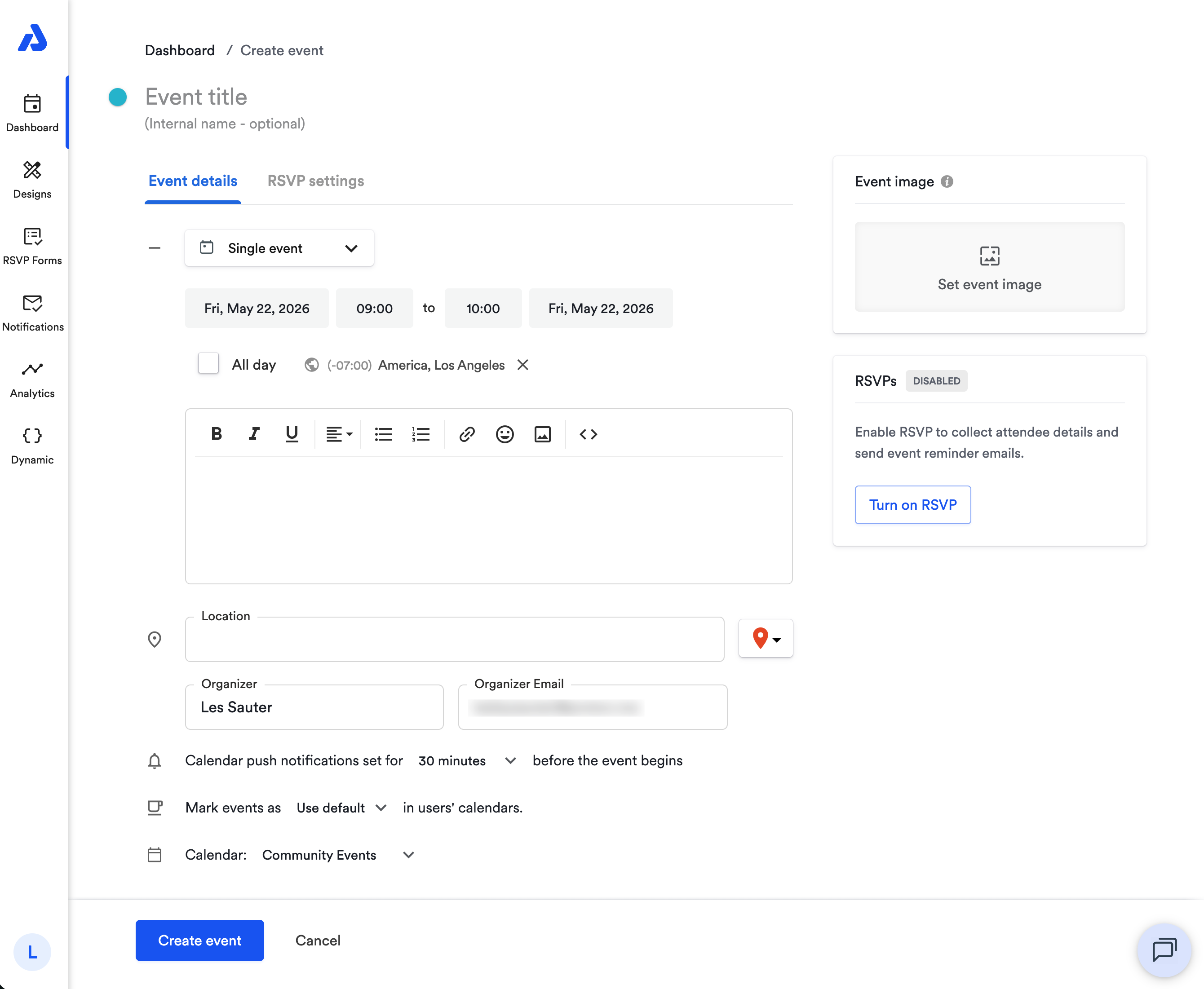
Once you've completed either of the options above, you'll be directed to the Create event page (see image below). From there, you can customize all of the event details.
You can click here to learn about all of the available event details included on the Create event page.
After filling in the essential details, click Create event. This is where the magic happens, and you get to share the event with your audience from one of the options provided on the event details page!
Sharing Your Event
Now, let's go over the three different sharing methods AddEvent offers! All of the sharing methods are outlined below.
Event Landing Page
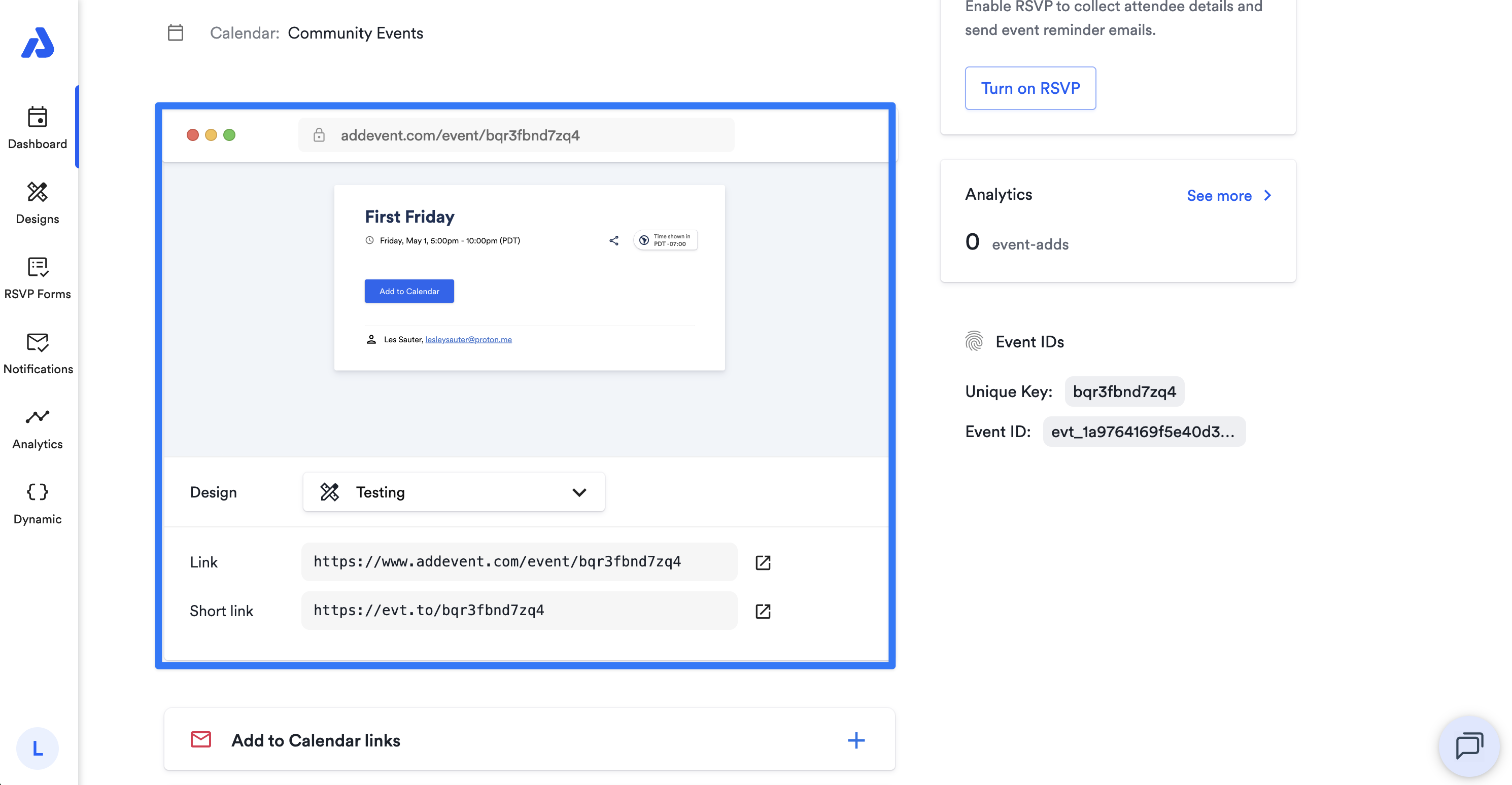
When you create an event, a unique landing page is automatically generated. You will be provided with two URLs, one generic link and one short link.
To share the event landing page with your audience, copy and paste either link. You can paste the link into an email or text message, post it on social media, or even hyperlink it in a PDF file!
To learn more about Event Landing Page Links, see our help doc here.
Add to Calendar Links
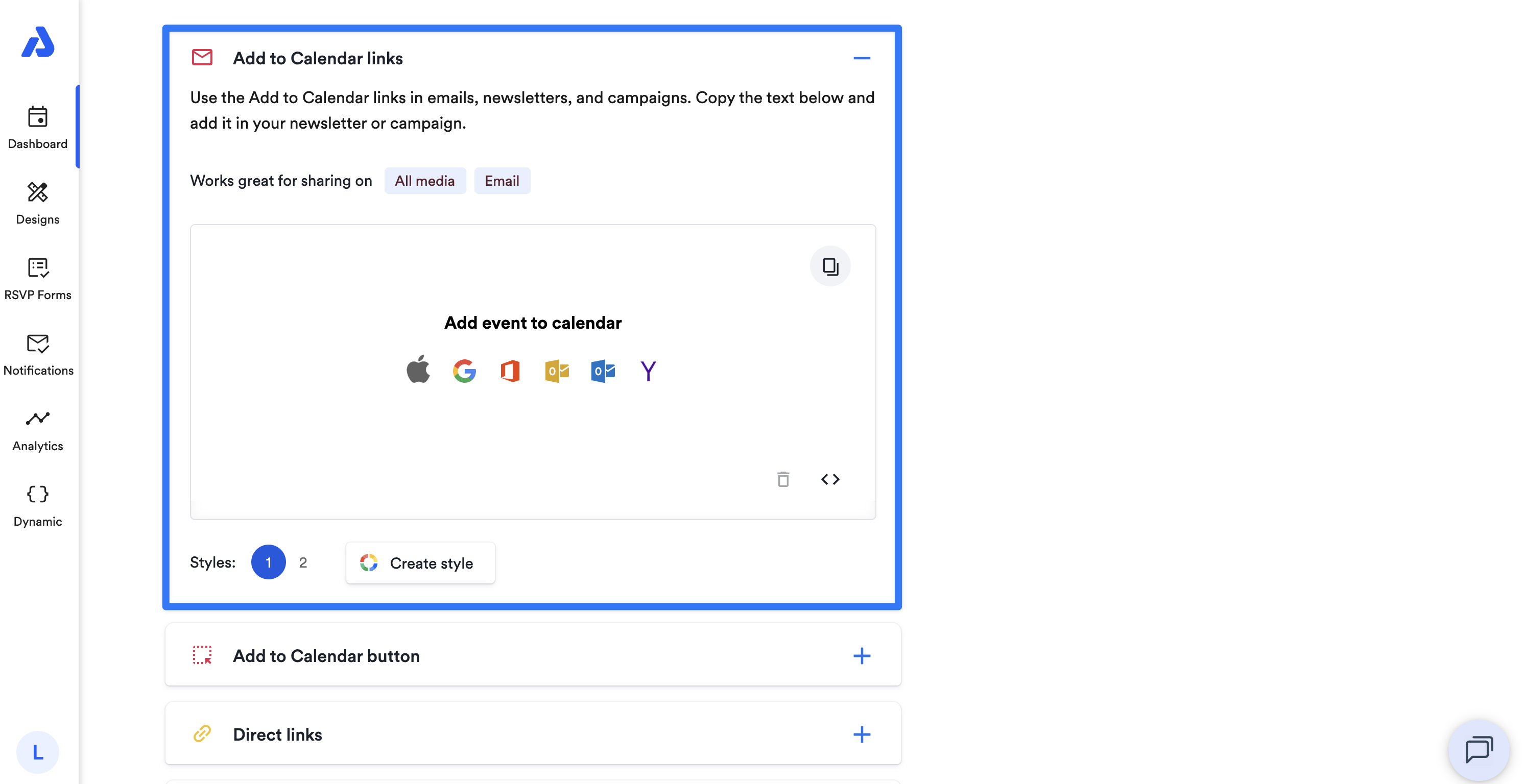
You can also share your event via Add to Calendar links, used in emails, newsletters, and campaigns. These links work exceptionally well with Mailchimp, Marketo, Salesforce Marketing Cloud, and any other marketing automation tools.
To share Add to Calendar links, choose between the two styles provided or customize your own styling, and copy the code provided with the clipboard icon or the source code icon (< >). Then, you can paste it into the content editor of your email, newsletter, or campaign.
When your end-users click any of the links, they'll be automatically directed to the calendar platform they select (unless you have enabled RSVP, but we'll save that how-to for later) where they can add the event to their calendar.
To learn more about Add to Calendar links, see our help doc here.
Add to Calendar Button
You can share your event by including the Add to Calendar button on your websites and landing pages. The Add to Calendar button works perfectly in all up-to-date browsers, tablets, and mobile devices, along with Apple Calendar, Google Calendar, Outlook, Outlook.com, and Yahoo Calendar.
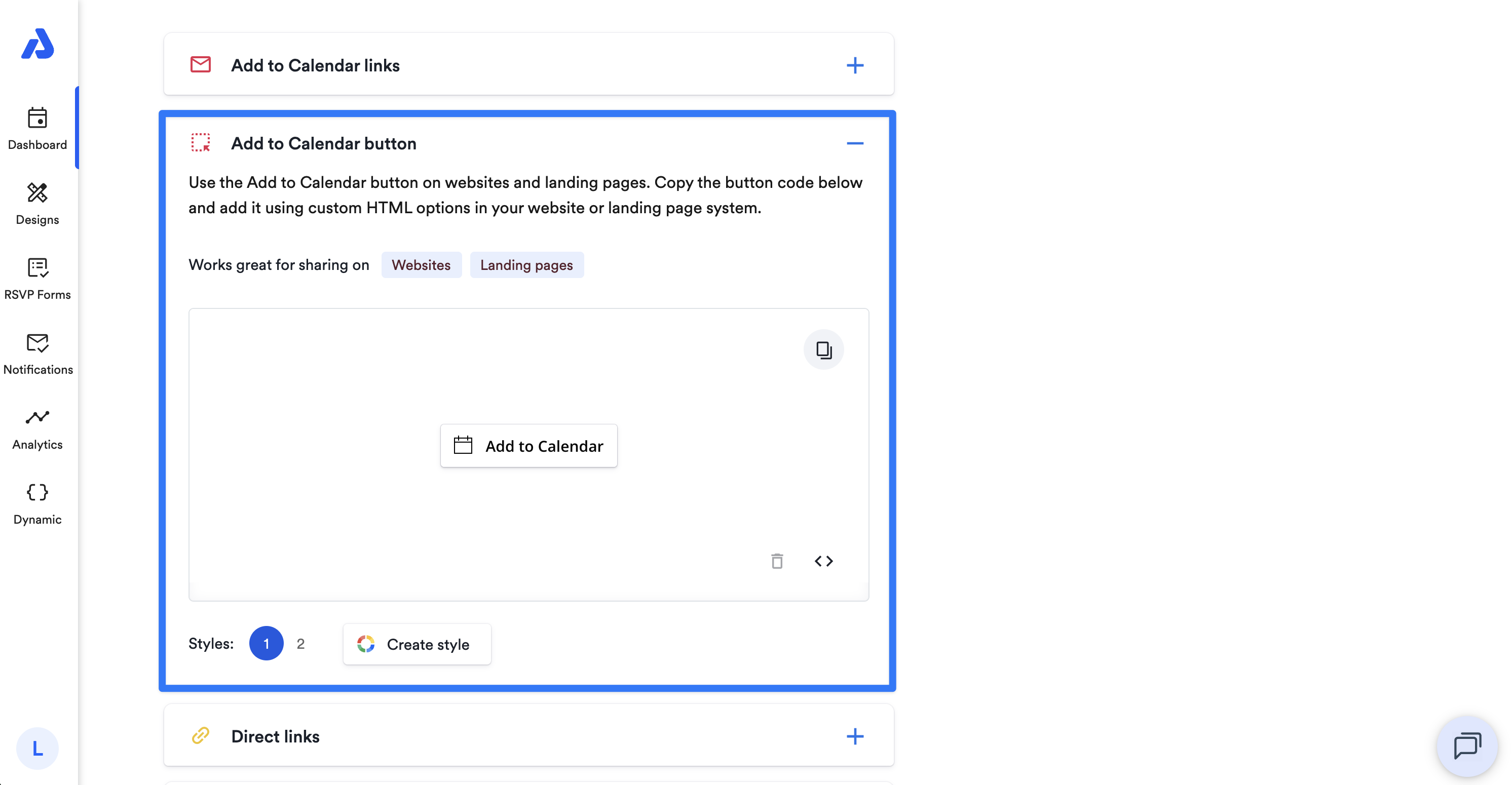
When you include an Add to Calendar button on your website, you increase the likelihood that your audience will add your event to their calendars by reducing the time and effort required!
To learn more about Add to Calendar buttons, see our help doc here.
Direct Links
You can share Direct Links with your attendees to allow them to download the event/redirect the attendee to the calendar service immediately. We include a link for each available calendar service.
This sharing method is perfect for when you know your attendees all use the same calendar service, or when an attendee requests a direct link to a specific calendar service.
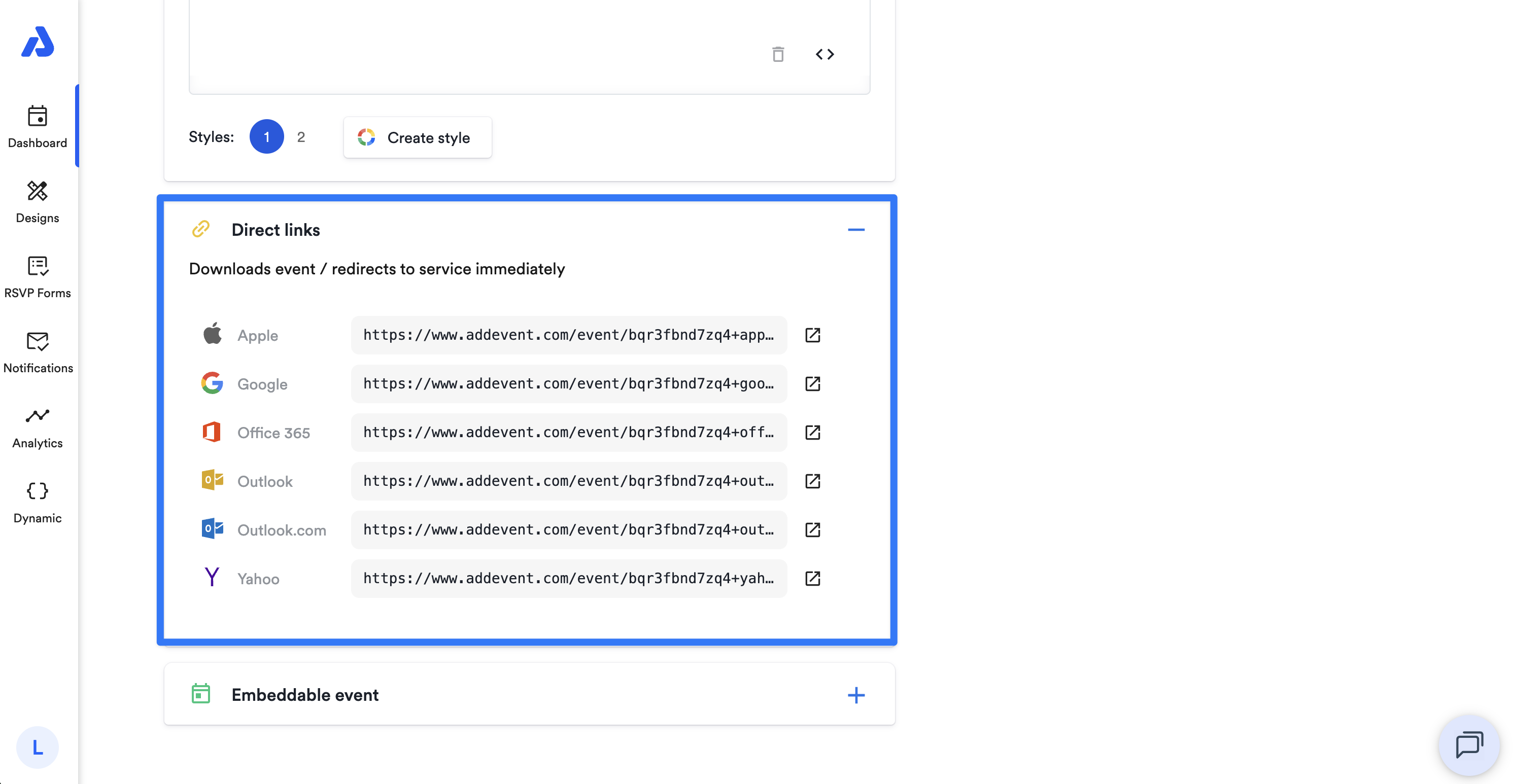
To learn more about Direct Links, see our help doc here.
Embeddable Event
Last, but definitely not least favored, there is an option to embed your event on your website! The embedded event allows you to easily let your attendees view your event's details and add your event to their calendar!
By clicking the Embed options button, you can copy the embed code, URL, or URL including an iframe and paste it directly on your website.
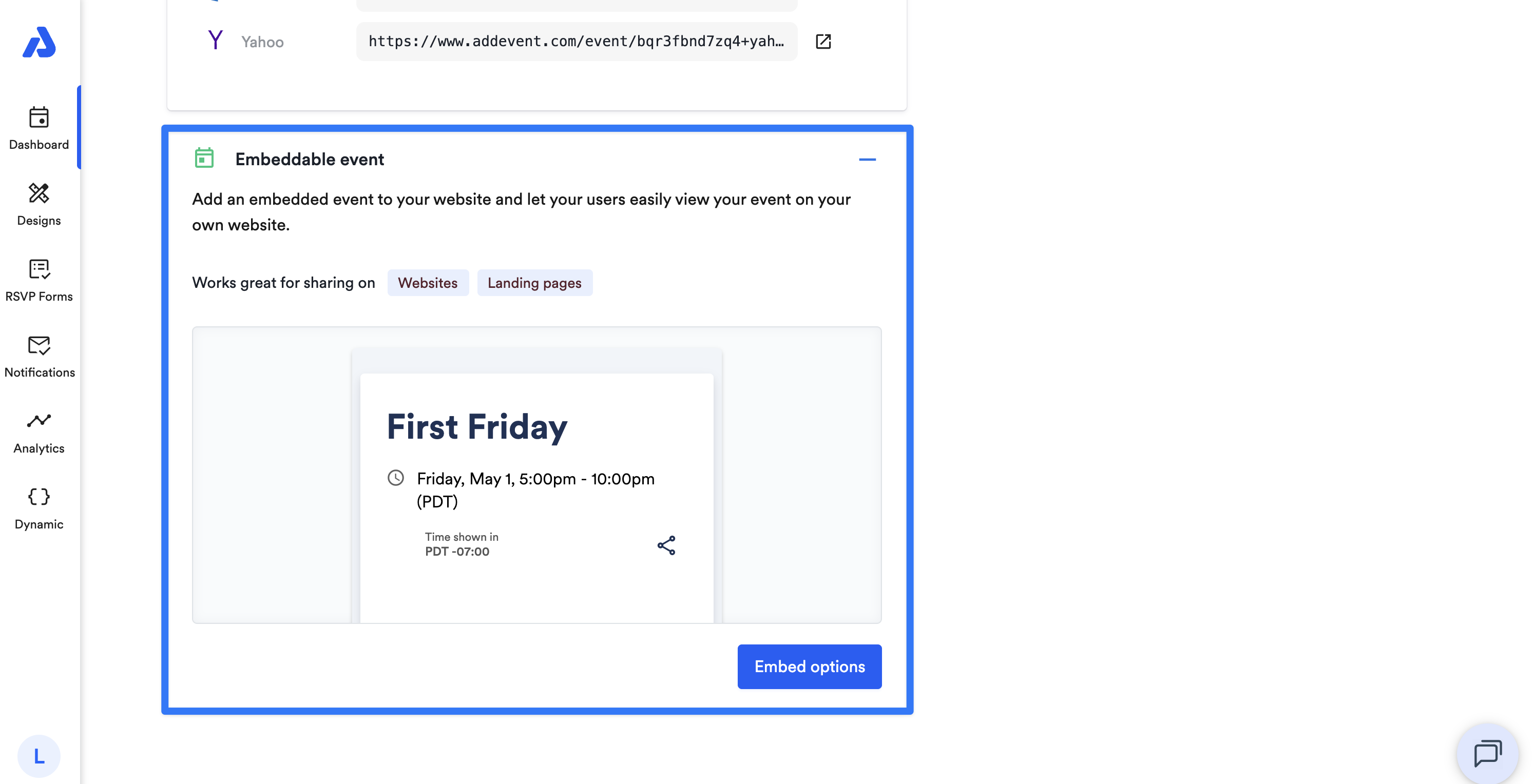
To learn more about Embeddable Events, see our help doc here.
Watch This Tutorial!
Updated 5 months ago